Origins
The Tuatha Dé Danann are among the most important and mysterious figures in Irish mythology, occupying a central place in the legendary history of Ireland. Their name is commonly translated as “the People of the Goddess Danu” or “the Tribe of the Goddess Danu,” connecting them to a divine mother figure named Danu and emphasizing their supernatural identity. Unlike ordinary humans, the Tuatha Dé Danann were described as a race of powerful, godlike beings known for their beauty, intelligence, magical abilities, and deep connection to nature and the spiritual world. They were associated with kingship, poetry, healing, war, fertility, craftsmanship, and wisdom, and they are often understood as the ancient pagan gods of Ireland whose stories survived through myth after the arrival of Christianity.
The main source for their story comes from medieval Irish literature, especially the Lebor Gabála Érenn (The Book of the Taking of Ireland), which tells of several mythical invasions of Ireland. According to this text, the Tuatha Dé Danann came to Ireland from four magical northern cities: Falias, Gorias, Murias, and Findias. In these cities they learned druidry, magic, wisdom, and secret knowledge. They also brought with them four sacred treasures that symbolized their divine power: the Lia Fáil (Stone of Destiny), which cried out under the rightful High King of Ireland; the Spear of Lugh, which guaranteed victory in battle; the Sword of Nuada, from which no enemy could escape; and the Cauldron of the Dagda, which could feed everyone without ever becoming empty. These treasures represented kingship, strength, justice, and abundance.
When the Tuatha Dé Danann arrived in Ireland, legend says they came surrounded by dark clouds or mist, creating an image of mystery and supernatural power. They burned their ships after landing so they could not return, showing that they intended to claim Ireland as their permanent home. Their first major conflict was against the Fir Bolg, the people who ruled Ireland before them. This battle, known as the First Battle of Mag Tuired, ended in victory for the Tuatha Dé Danann. However, their king, Nuada, lost his arm during the fighting. Since a king had to be physically perfect, Nuada was forced to step down and was replaced by Bres, whose unfair and weak rule caused suffering among the people.
One of the greatest heroes of the Tuatha Dé Danann was Lugh, a brilliant warrior and master of every skill, often called Lugh of the Long Arm. He became a central figure in the Second Battle of Mag Tuired, where the Tuatha Dé Danann fought against the Fomorians, a race often linked to chaos, destruction, darkness, and dangerous natural forces such as storms and famine. Under Lugh’s leadership, the Tuatha Dé Danann defeated the Fomorians and restored balance and order to Ireland. This battle is often seen as a symbolic struggle between civilisation and chaos.
Other important members of the Tuatha Dé Danann include the Dagda, known as the “Good God,” who represented strength, wisdom, abundance, and fatherhood; Brigid, goddess of healing, poetry, and smithcraft; the Morrigan, a goddess of war, prophecy, and fate; and Manannán mac Lir, associated with the sea and the Otherworld. These deities show that the Tuatha Dé Danann were not simply warriors, but divine beings who controlled important aspects of both nature and human life.
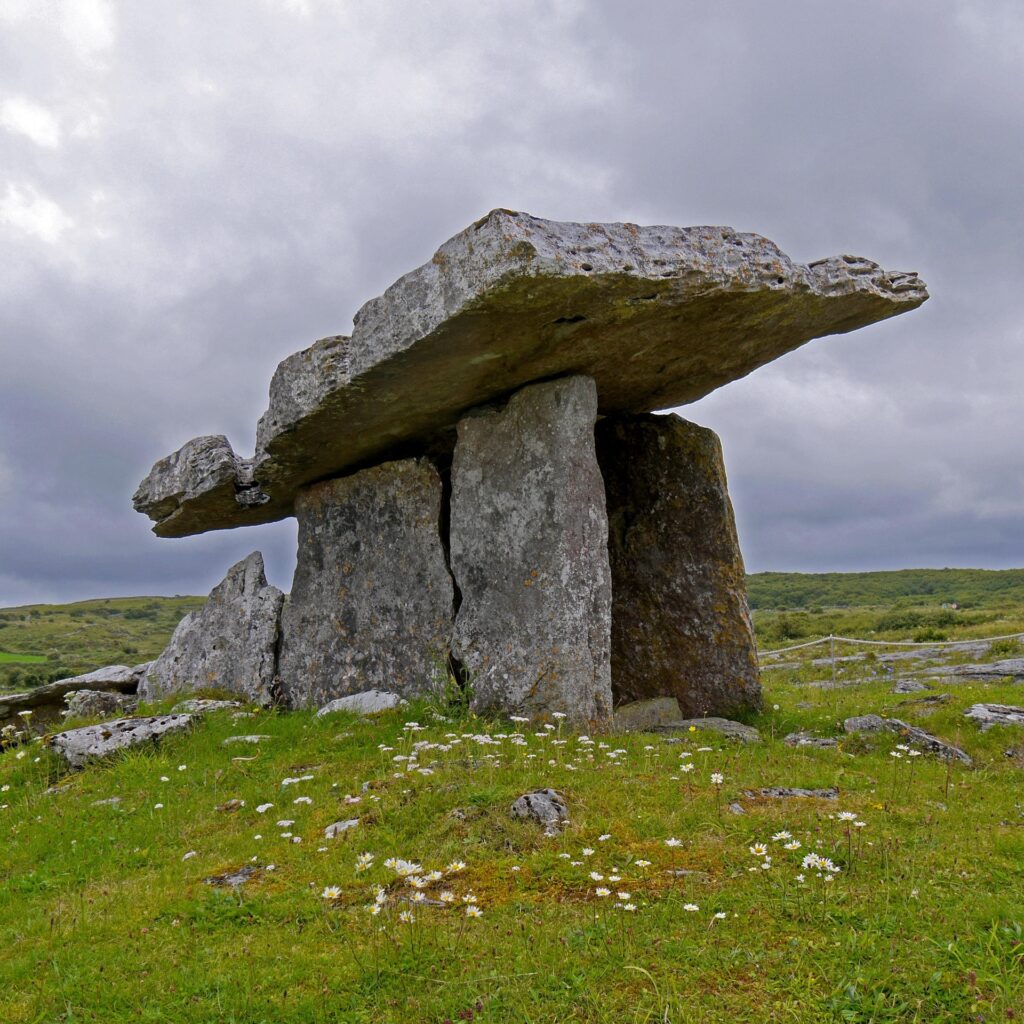
Eventually, the Tuatha Dé Danann were defeated by the Milesians, who were believed to be the ancestors of the Irish people. Instead of disappearing, they retreated underground into the sídhe, the ancient burial mounds and sacred hills of Ireland. From there, they became connected with the Aos Sí, the fairy people of Irish folklore. This transformation allowed the old gods to remain part of Irish belief, changing from rulers of the land into mysterious supernatural beings who lived in the hidden world beneath it.
The Tuatha Dé Danann remain a powerful symbol of Irish mythology and cultural identity. Their stories explain the origins of sacred places, kingship, and the supernatural world, while preserving memories of Ireland’s ancient religious traditions. As both gods and legendary ancestors, they continue to influence literature, folklore, and modern interpretations of Celtic history.
Key Vocabulary
- Tuatha Dé Danann – “The People of the Goddess Danu,” a supernatural race in Irish mythology
- Danu – A mother goddess believed to be the ancestor of the Tuatha Dé Danann
- Lebor Gabála Érenn – “The Book of the Taking of Ireland,” a medieval text about mythical invasions of Ireland
- Lia Fáil – The Stone of Destiny that recognised the rightful king
- Nuada – King of the Tuatha Dé Danann who lost his arm in battle
- Lugh – Hero god associated with skill, light, and victory
- Dagda – The “Good God,” linked to abundance, wisdom, and strength
- Brigid – Goddess of healing, poetry, and blacksmithing
- Morrigan – Goddess of war, fate, and prophecy
- Fomorians – Mythical enemies representing chaos and destruction
- Fir Bolg – Earlier inhabitants of Ireland defeated by the Tuatha Dé Danann
- Milesians – Final invaders who defeated the Tuatha Dé Danann and became ancestors of the Irish people
- Sídhe – Sacred mounds or fairy hills where the Tuatha Dé Danann retreated
- Aos Sí – Fairy folk or supernatural beings in later Irish folklore